Wedding Ceremony Songs: What to Play for Each Moment, Plus Real Music Costs
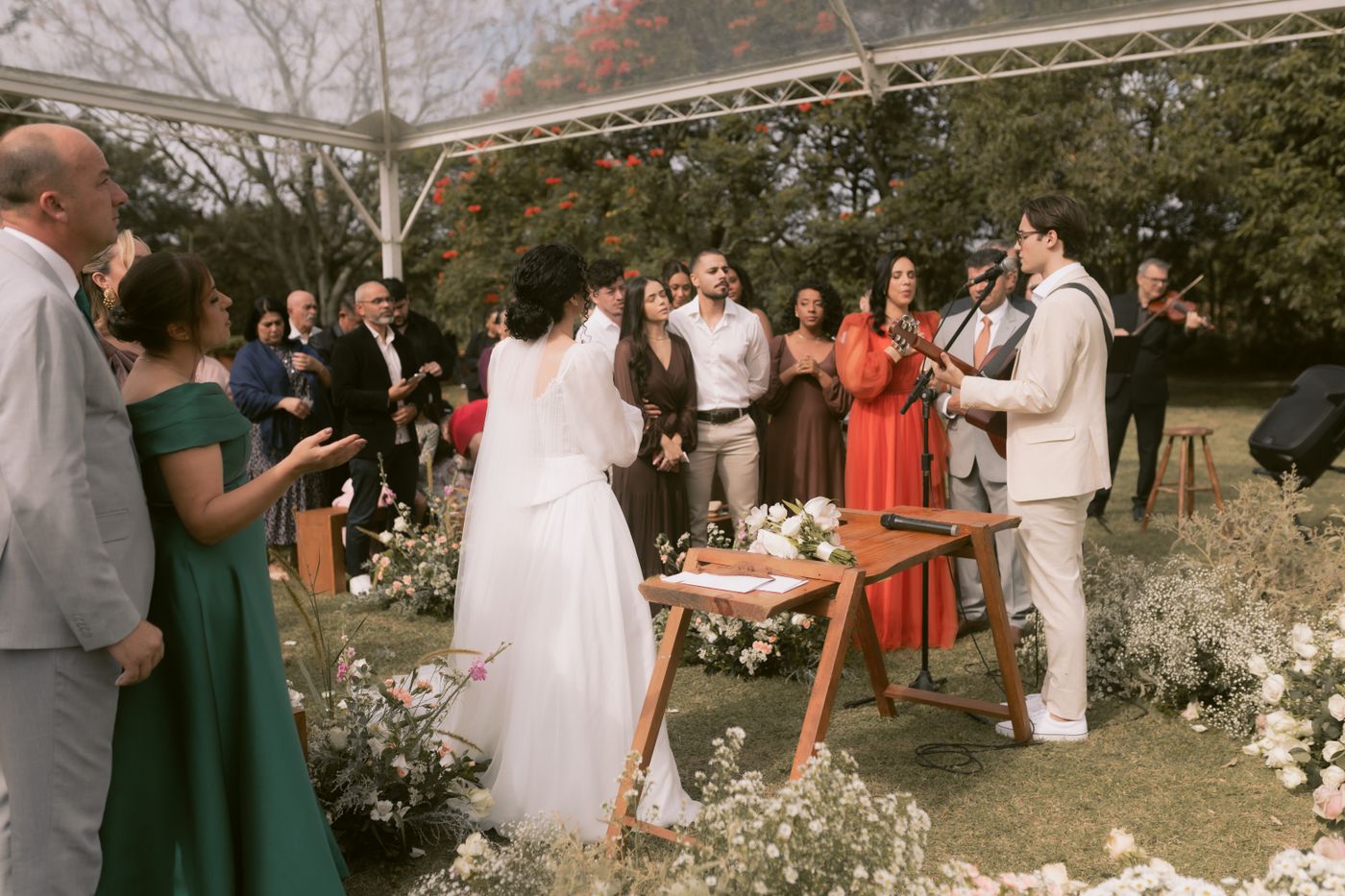
Wedding ceremony songs only need to cover three moments: the processional as you walk in, a song or two while you sign, and the recessional as you walk out married. Pick three to five songs you love, decide whether a musician plays them or a speaker does, and you can have lovely ceremony music for anything from about $75 for one rented speaker to $1,000 or more for a string quartet.
Your ceremony probably lasts 20 to 40 minutes, and the music fills maybe ten of them. That is good news for your budget. You are not booking a concert, you are choosing a soundtrack for three short walks and one quiet pause.
The three moments, and how long each one lasts
Processional. Guests stand, the wedding party walks in, then one of you (or both) walks down the aisle. Many couples use one song for the wedding party and a second, bigger one for the final entrance. Plan on 2 to 4 minutes in total, depending on the length of your aisle and the number of people walking.
Signing. While you sign the register or marriage license, there is a gap of 3 to 5 minutes where nothing is being said. One calm song, or two short ones, fills it nicely. If your ceremony has a unity candle, sand ritual or reading by a friend, soft background music works there too.
Recessional. The officiant presents you, everyone cheers, and you walk back up the aisle. This should be the happiest, most upbeat track of the day. You only need about a minute of it, but let it keep playing while guests follow you out.
Optional extras are a prelude while guests find their seats (15 to 20 minutes of anything gentle) and a postlude as they leave. A streaming playlist handles both well, even if you hire live musicians for the main moments.
If you are still working out the order of the whole day, our wedding day timeline shows where the ceremony sits and how much buffer to leave around it.
Song ideas by style
Here are ideas to get you started, title and artist only. Listen to each one in full before you choose, and check the version: an instrumental cover often fits the processional better than the original.
Classic and classical
- Processional: Canon in D (Johann Pachelbel), Bridal Chorus (Richard Wagner), Air on the G String (J.S. Bach)
- Signing: Clair de Lune (Claude Debussy), Ave Maria (Franz Schubert)
- Recessional: Wedding March (Felix Mendelssohn), Spring from The Four Seasons (Antonio Vivaldi)
Pop and modern love songs
- Processional: A Thousand Years (Christina Perri), Can't Help Falling in Love (Elvis Presley), Perfect (Ed Sheeran)
- Signing: Lucky (Jason Mraz and Colbie Caillat), At Last (Etta James), Make You Feel My Love (Adele)
- Recessional: Signed, Sealed, Delivered I'm Yours (Stevie Wonder), You Make My Dreams (Daryl Hall and John Oates), Best Day of My Life (American Authors)
Acoustic and indie
- Processional: Bloom (The Paper Kites), Here Comes the Sun (The Beatles), Yellow (Coldplay)
- Signing: Better Together (Jack Johnson), Banana Pancakes (Jack Johnson), Into the Mystic (Van Morrison)
- Recessional: Ho Hey (The Lumineers), Home (Edward Sharpe and the Magnetic Zeros)
A neat trick: ask a string player or guitarist to play an instrumental version of a pop song you love for the processional. Guests recognize it a few bars in, and it still feels calm enough for the walk.
Live musicians or a playlist: what each costs
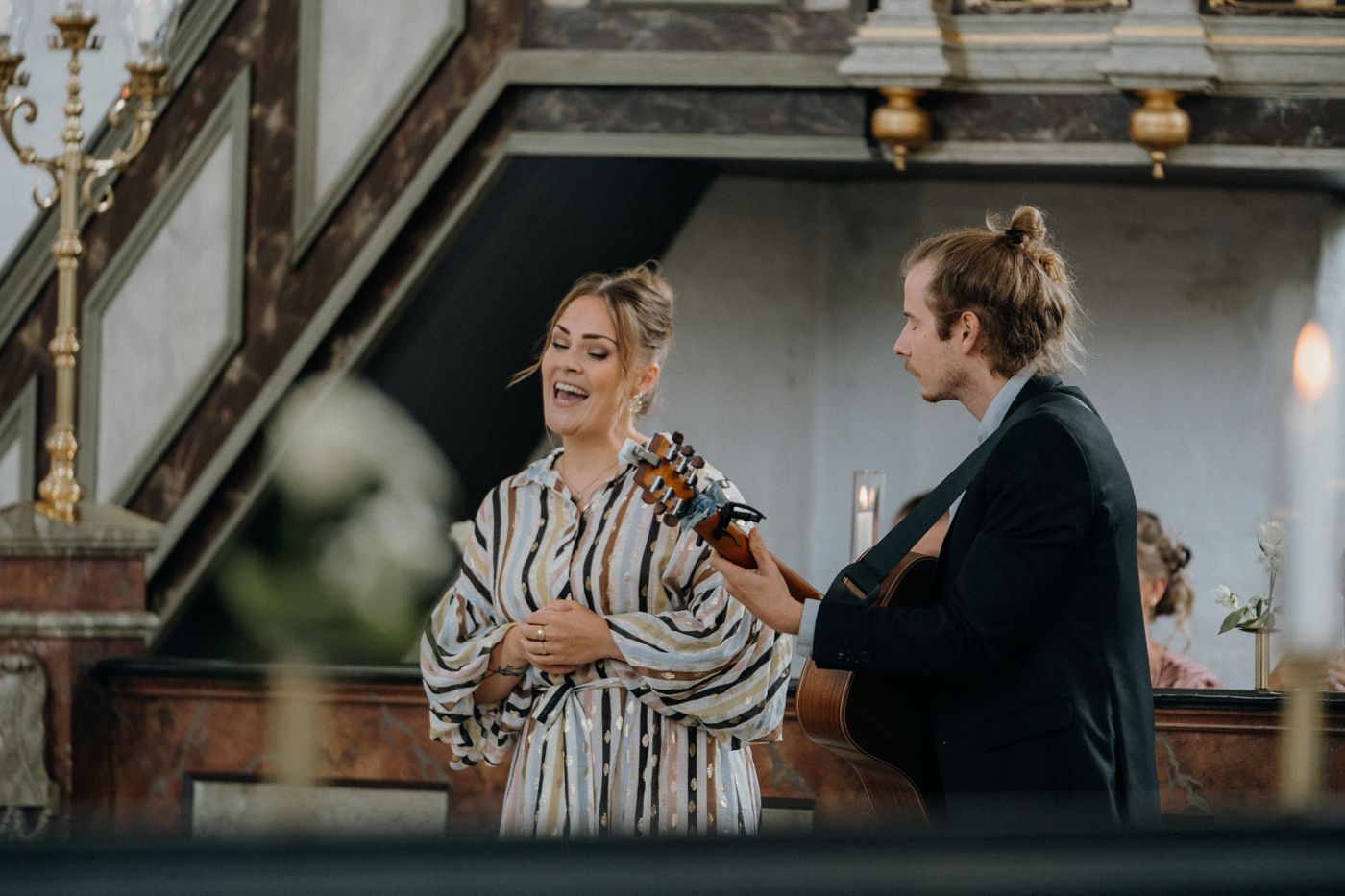
Live music sounds warm and adapts to the moment. A good musician will stretch the processional if the flower girl stops halfway, and fade out exactly when you reach the front. Here is what ceremony-only music costs in the US, according to Paperlust's 2026 price guide (Paperlust):
| Option | Ceremony only |
|---|---|
| Solo acoustic guitarist | $200 to $500 |
| Solo violinist | $300 to $700 |
| Solo singer | $300 to $700 |
| Church organist | $175 to $350 |
| String duo (violin and cello) | $600 to $1,200 |
| String quartet | $1,000 to $3,000 |
The same guide notes that a custom arrangement of a song costs $150 to $350 per piece. So if your musician does not already know your pop song, either choose one from their list or budget for that.
A DJ is the other option. Most couples spend between $780 and $1,495 on a wedding DJ, with an average of about $1,000 (WeddingWire). If you already have one booked for the reception, ask about ceremony coverage: many DJs add it for $200 to $400 more (Paperlust), and they bring the speaker and microphone.
A playlist costs almost nothing in music. You only pay for sound, and you need a person to press play.
Speaker rental: the part people forget
Outdoors, a phone speaker is lost after the third row. And even if music is not the issue, guests in the back still need to hear your vows. A small rented PA with a wireless microphone fixes both.
Paperlust's sound system guide gives these US prices (Paperlust):
- One powered PA speaker: $75 to $200 per day
- Wireless handheld microphone: $75 to $150 per day
- Ceremony package you pick up and return yourself: $250 to $400
- Ceremony package with delivery and setup: $400 to $800
For most ceremonies under 100 guests, one powered speaker on a stand plus one wireless mic for the officiant is plenty. Ask the venue first: many already have a sound system and a mic you can use for free.
Making a playlist work on the day
- Download the songs. Never rely on streaming over venue wifi or a weak signal.
- Turn on airplane mode on the playing device so no message alert or call cuts in.
- Turn off shuffle and crossfade, and put each song in a separate, short playlist per moment so your helper only presses play once.
- Pick a helper who is not in the wedding party. A calm cousin with a printed cue sheet (song, moment, cue) is ideal. Do a run-through at the rehearsal.
- Plan the fade. Agree on a signal for "fade out now", like the officiant nodding.
A licensing note for venues
You do not need to buy a license to play songs at your own private wedding. Commercial venues that host events usually hold music licenses already, so it is their side to handle. What you do need to check is the venue's own rules: some limit amplified sound outdoors or set a volume cap, some only allow their in-house sound system, and many churches have rules about secular songs in the service. Ask before you book musicians or print the program.
Spend the savings on the aisle
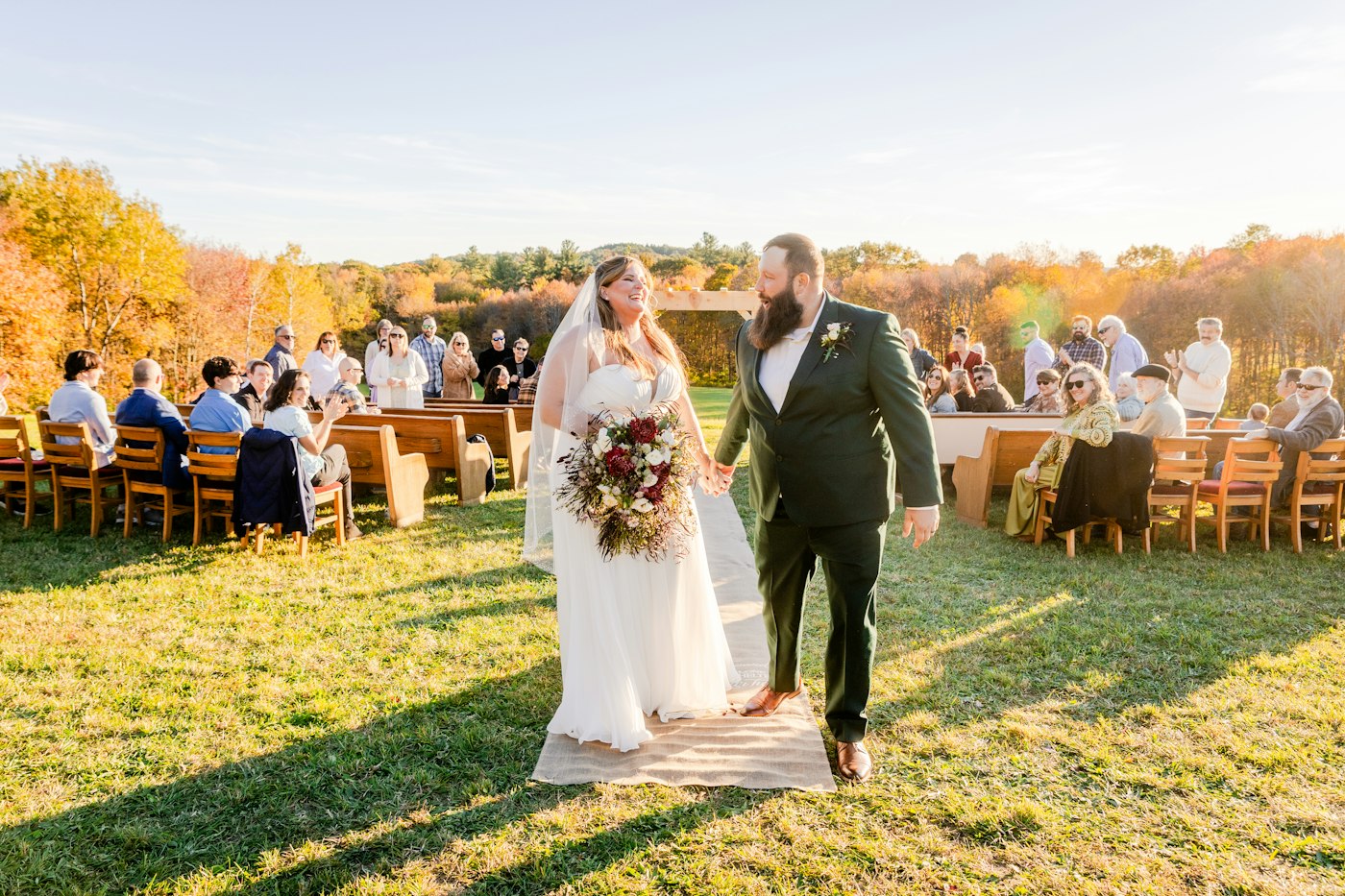
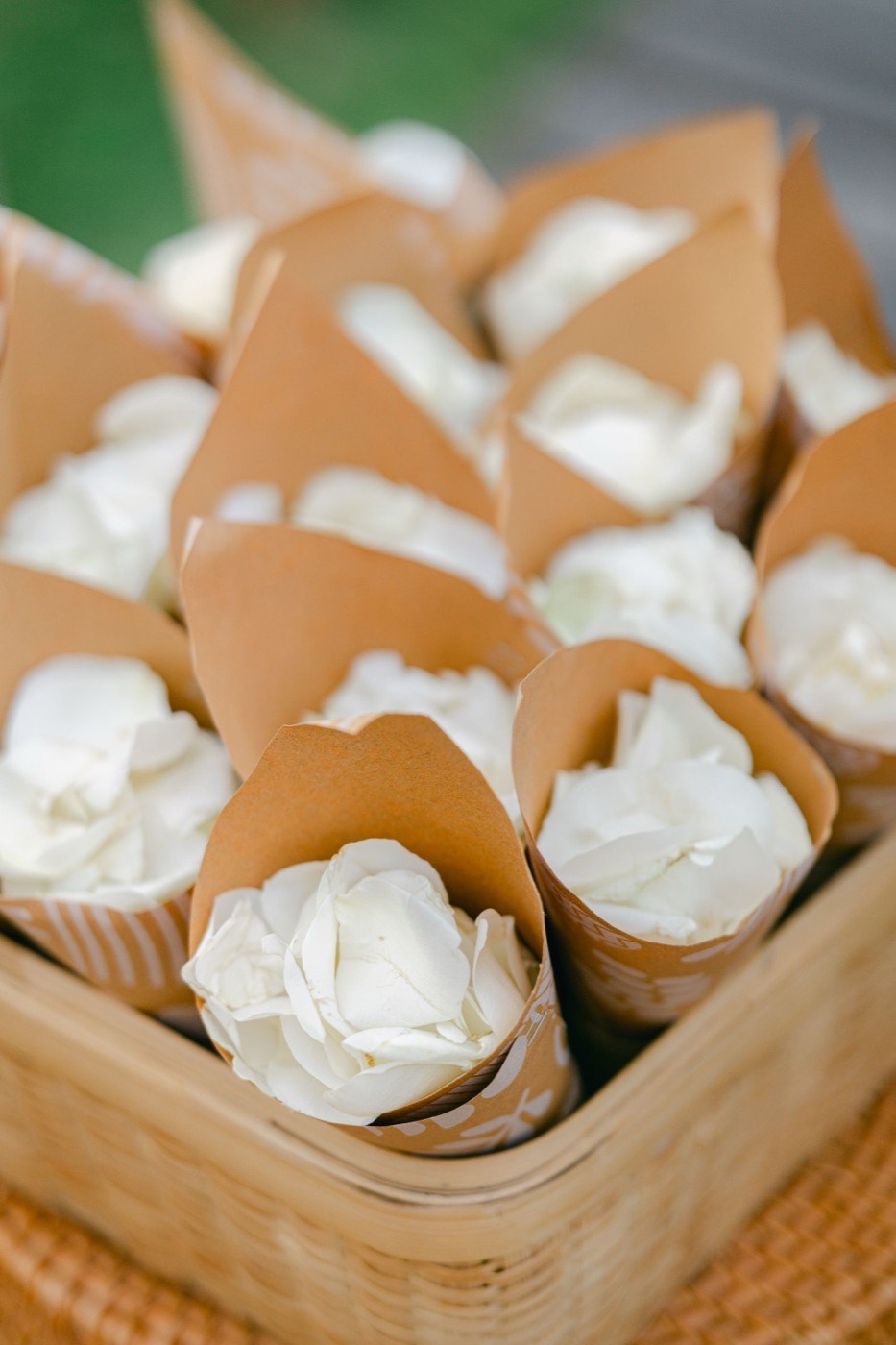
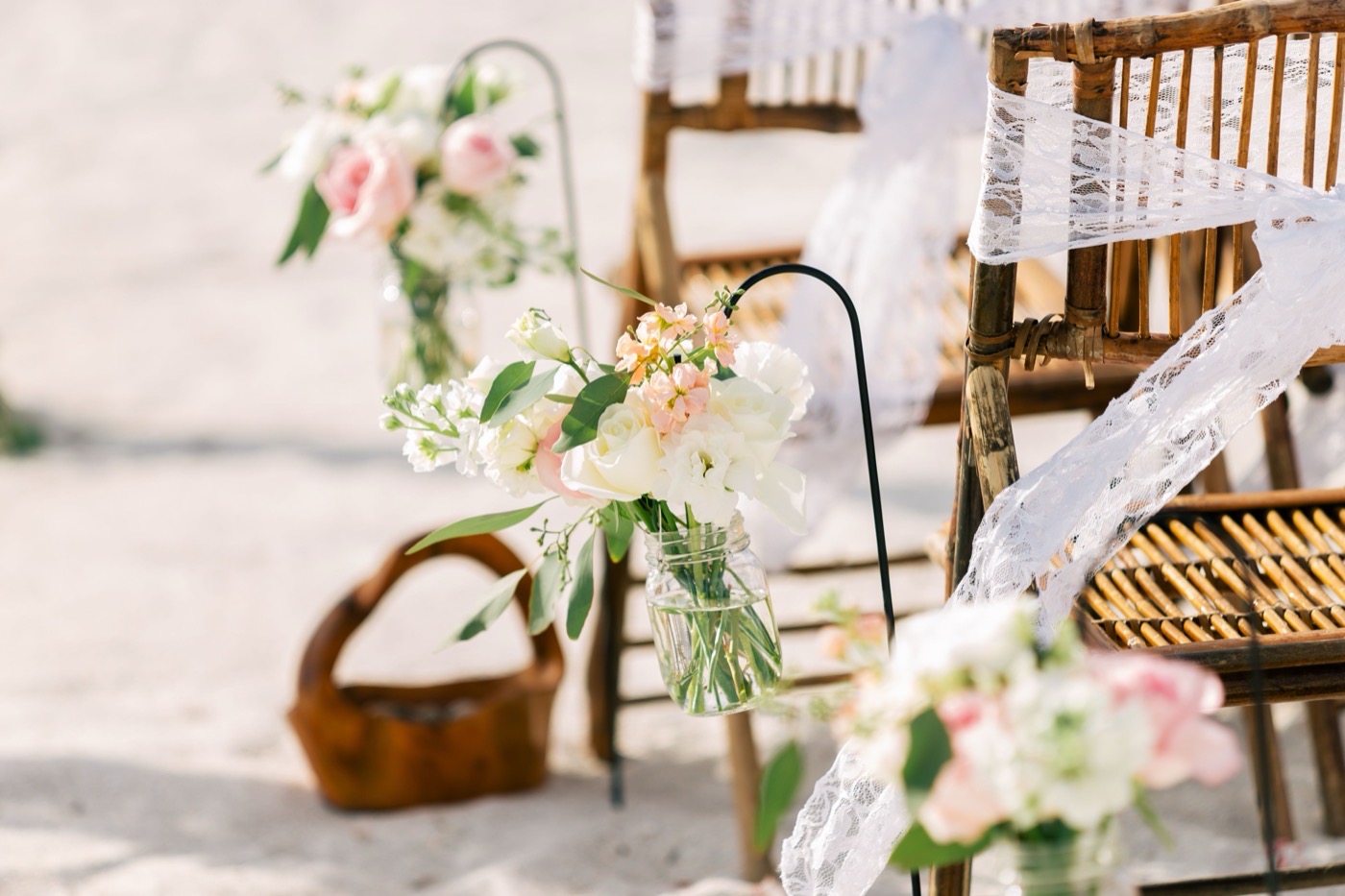
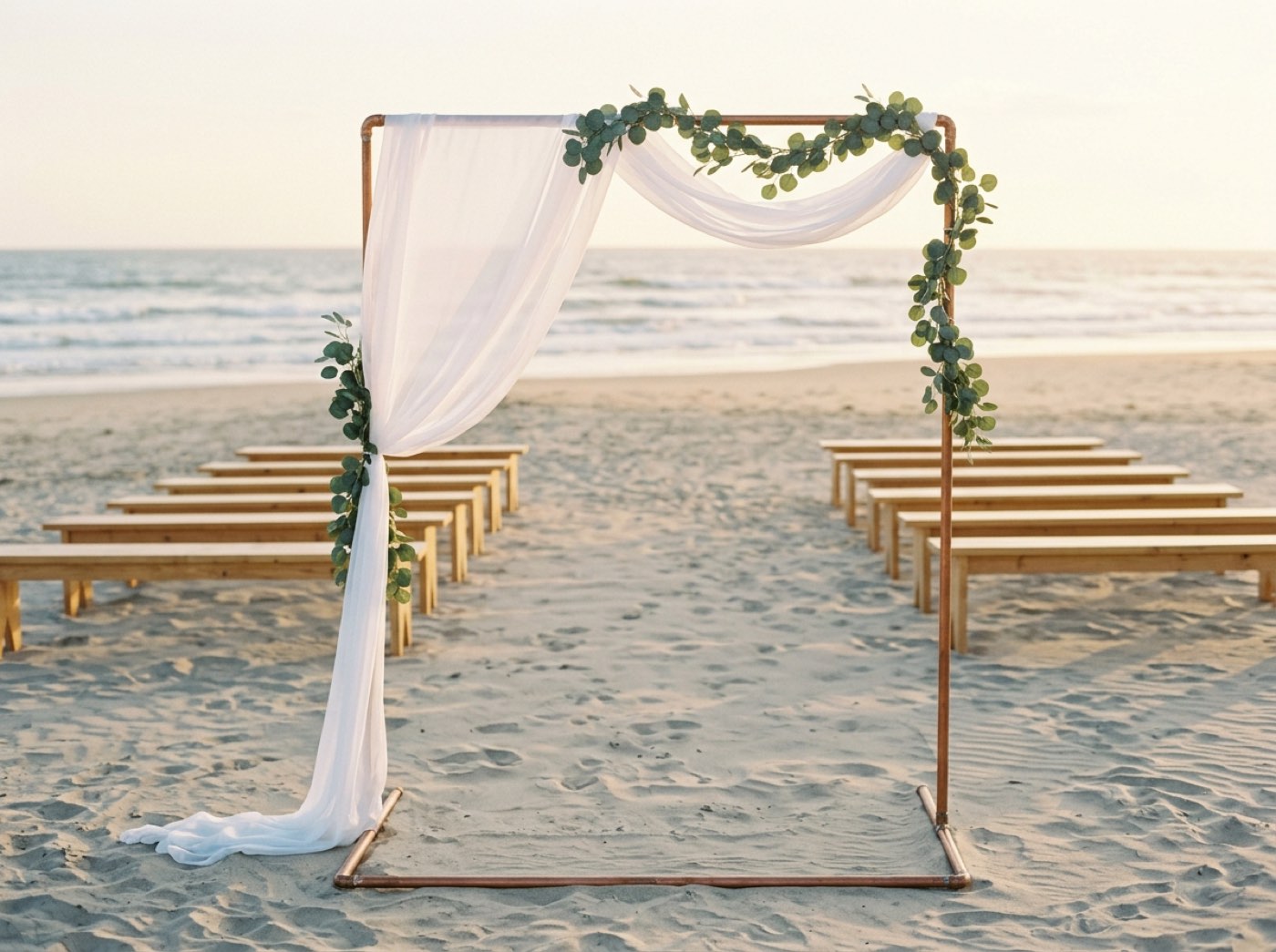
Choosing a playlist and a $75 speaker instead of a quartet can free up hundreds of dollars. A good part of it can go into the spots your music is playing over. Line the aisle with shepherd hook aisle markers or punched tin can lanterns, and give guests lavender petal cones to throw during the recessional so your happiest song comes with a cloud of petals. If you want a frame at the front, a copper pipe arch gives you somewhere to stand that you keep afterwards. For more ideas on the setup, see our guide to ceremony decor on a budget.
When live music is worth paying for
- Large or noisy outdoor venues, where a musician with their own amp beats a single small speaker.
- Church ceremonies with an organ: the organist is often the cheapest live option and the room is built for it.
- One song that matters a lot, such as a grandmother's favorite hymn. A solo singer or guitarist for just that moment, with a playlist for the rest, is a lovely mix.
And if none of that applies, a well-chosen playlist through a decent speaker sounds great. Your guests will remember you walking in to a song that means something to you, not what it cost. Pick the three songs, test the speaker, and enjoy that walk.
Guides in this article
Unlock our complete DIY library
Free
- Cost and savings estimates for every project
- Materials lists to help you plan
- The “How much can you save?” overview
- New blog posts with inspiration and advice
A short list of the cheapest projects with the biggest savings. We email it to you.
Full access
$29
- Step-by-step instructions for every project
- Cost and quantity tables for 50, 100 or 150 guests
- Pro tips and common pitfalls to avoid
- Printable checklists to keep you on track
- Save your favorite projects
- New guides added every week
One payment, yours to keep. No subscription.