Wedding Program Wording: What to Include, in What Order, With Examples You Can Copy
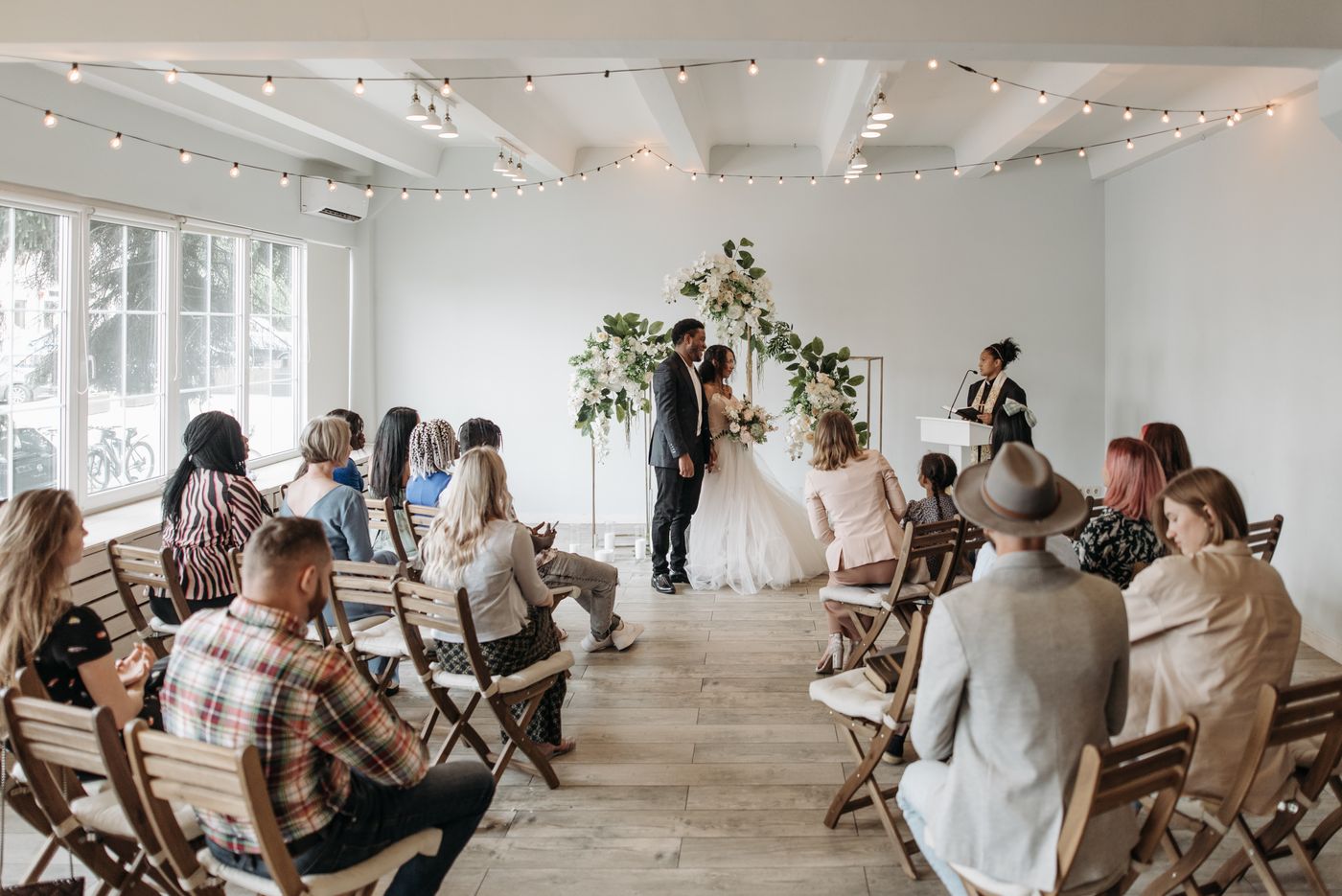
Good wedding program wording is short: your names, the date and place, the order of the ceremony, who is standing up with you, and one line of thanks. Everything else is optional, and most programs fit on a single card printed on both sides.
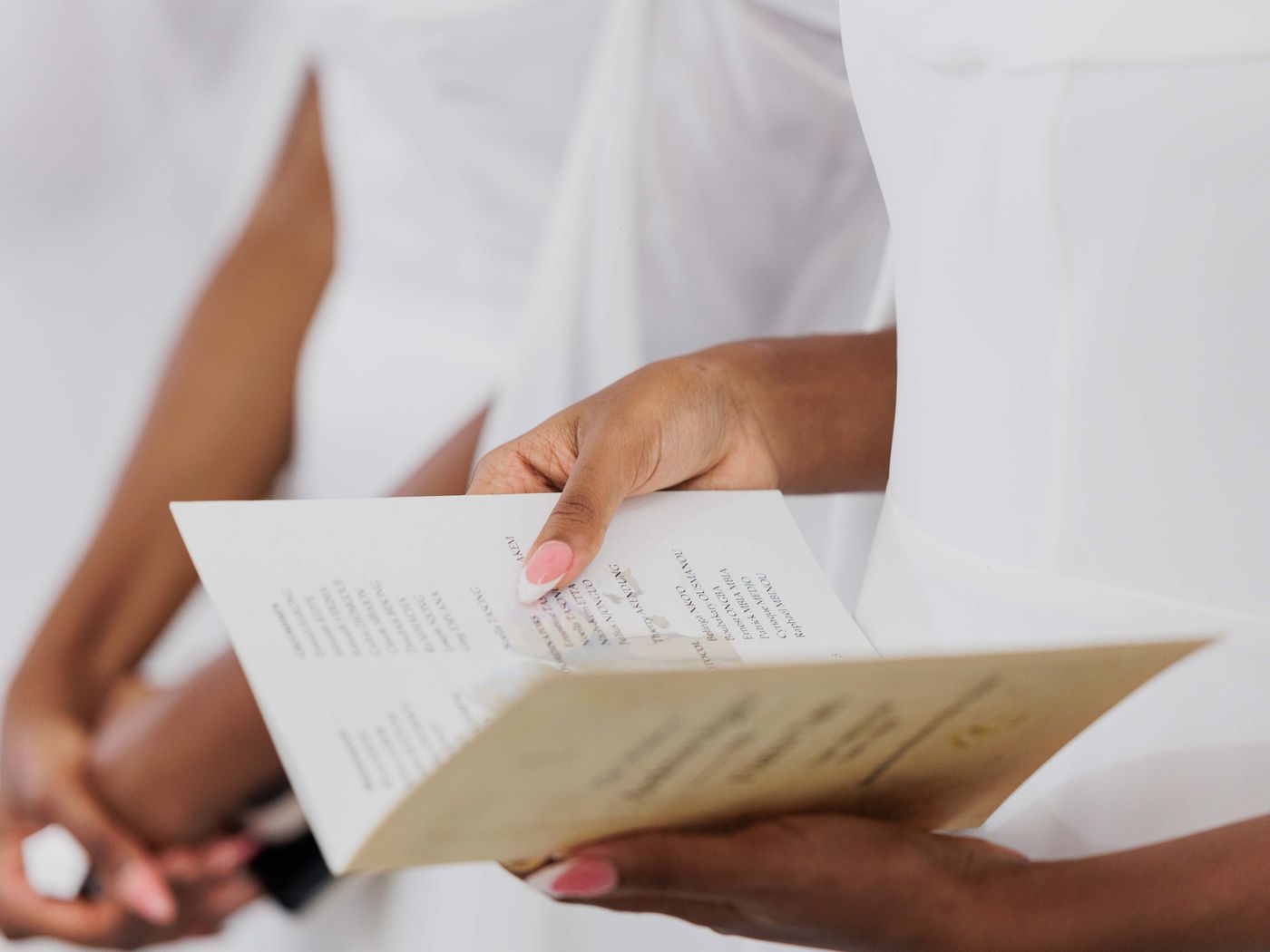
Guests read a program for the ten minutes before the ceremony starts and then hold it. That is the whole job. So the trick is to give them the useful bits (what happens next, who that person reading is, when to stand) and stop before it turns into a booklet nobody finishes.
What goes in a wedding program
Here is the full list, from must-have to nice-to-have:
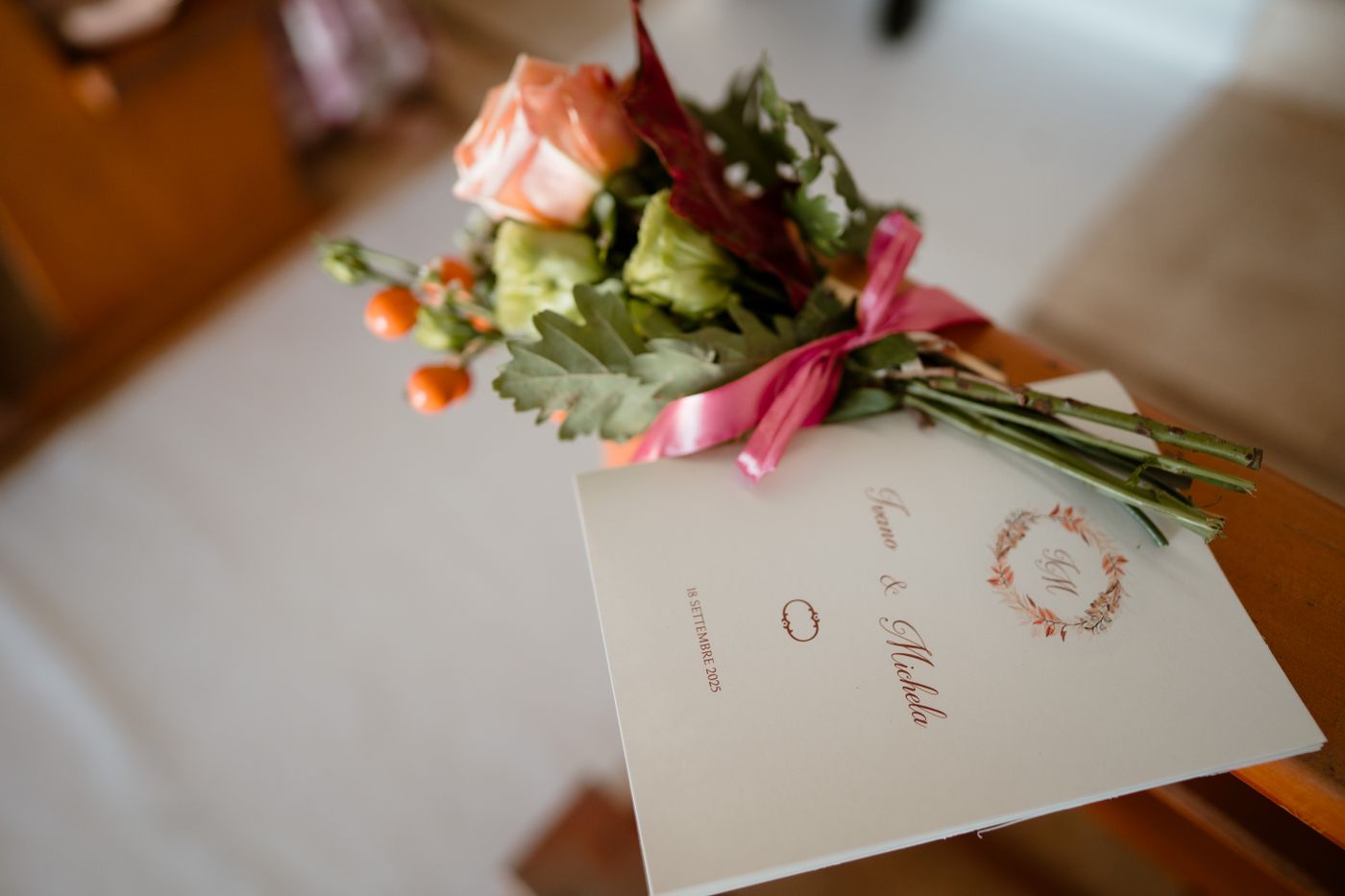
- Cover: your two names, the date, the venue and town.
- Order of ceremony: each part in one line, with the name of the person doing it.
- Wedding party: officiant, maid of honor, best man, the rest of the party, flower girl and ring bearer. Add "sister of the bride" or "college roommate" if you like, guests love knowing who is who.
- Readings and music: titles and who reads or plays them.
- A line of thanks to guests, and maybe to parents.
- Optional extras: a note remembering someone who has died, an "unplugged ceremony" request, a hashtag, what happens after the ceremony (cocktail hour on the lawn, for example).
If you are writing out a full church service with hymns, prayers and responses, you need a folded booklet. Everyone else can stay with one flat card.
The usual order of a ceremony
Most programs follow the order of the ceremony itself. Your officiant will have the final say, so send them your draft before you print. Typical orders look like this:
| Non-religious ceremony | Church ceremony (no mass) | Short civil ceremony |
|---|---|---|
| Prelude music | Prelude | Welcome |
| Processional | Processional | Words from the officiant |
| Welcome | Greeting and opening prayer | Vows |
| Reading | First reading | Exchange of rings |
| Words about the couple | Second reading | Pronouncement |
| Vows | Homily | Signing |
| Exchange of rings | Vows and rings | Recessional |
| Pronouncement and kiss | Prayers and blessing | |
| Recessional | Recessional |
A Catholic wedding with a full mass adds the liturgy of the Eucharist and runs longer, which is where a 4 or 8 page booklet starts to make sense.
Wording examples for different ceremony styles
All of these are written for this article, so use, change or mix them freely. Swap in your own names, of course.
Modern and relaxed
Maya and Jonah Saturday, June 6, 2027 · Hollis Orchard, Vermont
Prelude · The Linden String Duo Here we go · Maya walks in with her mom Hello, everyone · Sam Okafor, our friend and officiant A reading · "Union" by Robert Fulghum, read by Priya The promises we wrote ourselves Rings Kiss, cheering, and out we go
Stay close. Drinks are under the apple trees right after.
Traditional church
The Marriage of Elizabeth Anne Grant and Thomas James Reilly Saturday, the twelfth of September, two thousand twenty-seven St. Brendan's Church, Portland, Maine
Prelude · Canon in D, Johann Pachelbel Processional · Trumpet Voluntary, Jeremiah Clarke Greeting and Opening Prayer · Reverend Paul Mendez First Reading · Ecclesiastes 4:9–12, read by Claire Grant, sister of the bride Second Reading · 1 Corinthians 13:4–8, read by Daniel Reilly, brother of the groom Homily Exchange of Vows and Rings Blessing Recessional · Ode to Joy, Ludwig van Beethoven
Small courthouse or elopement-style
Ana and Luis got married today City Hall, Room 3 · 2:30 p.m.
A few words · A few promises · Two rings · One signature
Thank you for squeezing into this small room with us. Lunch is on us at Bell Street Bistro, a five minute walk.
Short and funny
Jess + Ollie: The Ceremony Running time: about 20 minutes. Tissues: optional but likely.
- Ollie tries not to cry
- Jess walks in, Ollie cries
- Our friend Marcus says nice things
- We say nicer things
- Rings, kiss, applause (yours)
Then: food. We promise.
Lines you can add to any program
- In memory: "Today we remember Grandpa Joe, who would have been first on the dance floor."
- Unplugged ceremony: "Please keep phones in your pockets during the ceremony. Our photographer has it covered, and we would love to see your faces."
- Thanks to parents: "To our parents, thank you for every lift, every pep talk and a good part of today's bill."
- For guests: "Thank you for traveling, rearranging and showing up. It means more than this card has room for."
What wedding programs cost
Here are US prices we checked in October 2026:
| Option | Price | For 100 programs |
|---|---|---|
| Print at home on cardstock, 2 flat programs per sheet | $25.29 for 250 sheets of 110 lb ivory cardstock at Staples, about 5 cents a program plus ink | about $5 plus ink |
| Print at home, 1 folded program per sheet | about 10 cents a sheet | about $10 plus ink |
| Zazzle flat program | from $1.07 each on sale | about $107 |
| Zazzle folded budget program | $1.59 on sale, $1.87 regular | $159 to $187 |
| 4OVER4 folded programs | $82.38 for 100 | $82.38 |
Prices from Staples, Zazzle and 4OVER4. Online shops change their sale prices all the time, so check before ordering.
Our take: printing at home saves the most money, but only if your printer handles thick paper. If it jams on cardstock, a folded order from an online printer at well under a dollar each is a fair middle ground.
You also don't need one program per guest. One per couple or family is plenty, plus about ten spare for the front rows and the photographer's flat lay. For 100 guests, that means about 60 programs.
DIY printing tips that save you a reprint
- Do one test sheet first. Print one page on plain paper, fold it, and check that the front and back line up. Most home printers shift the back side by a few millimeters.
- Choose the right paper weight. 65 to 80 lb cover stock feeds through most inkjets. 110 lb looks nicer but is the weight many home printers struggle with, so check your printer's manual before buying a pack.
- Use a font size people can read. At least 11 point for the order of ceremony. Grandma is reading this in a sunny garden.
- Let the ink dry. Leave sheets spread out for an hour before folding or stacking, or the ink smudges onto the next one.
- Fold with a ruler or a butter knife. Running the back of a knife along the fold line gives you a crisp crease without a bone folder.
- Have two people proofread. Names, spellings of readings, the date. The two of you will read what you meant to write.
Make it match the rest of your stationery
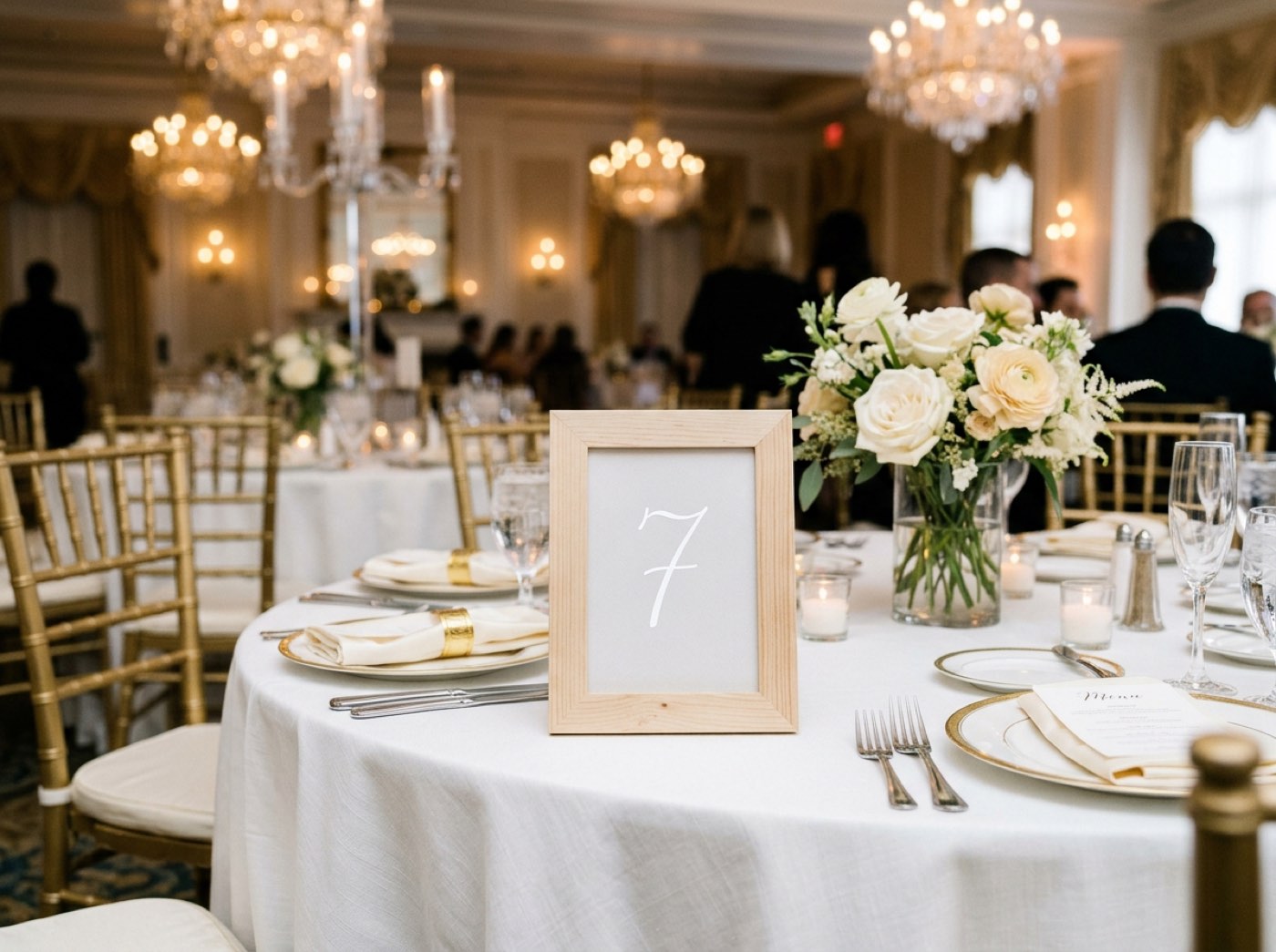
The cheapest way to make programs look planned is to reuse what you already designed. Print them on the same cardstock and in the same fonts as your invitations and your table numbers, and it all looks like one set without extra effort.
If you are making wax seal invitations, the same seal works on the program too: a small seal on the folded edge of a few programs for the front row looks lovely, and you already own the stamp. Doing pressed flower invitations? Put a scan of one of your pressed flowers on the program cover instead of buying clip art.
When you can skip programs entirely
Programs are a nice extra, not a must. Skip them if your ceremony is under 20 minutes with no readings, or if you have fewer than 30 guests who all know each other. A single large sign at the entrance with the order of ceremony does the same job, and you can reuse the easel for your seating chart later. Our ceremony decor article has more ideas for that space.
Whatever you print, write the program after your timeline is final. Our wedding day timeline helps you lock that in, so the program and the actual ceremony match.
The short version
Names, date, place, order of ceremony, wedding party, one line of thanks. Use one flat card unless you have a full church service. Print about one per household at home for around 5 to 10 cents each, or order online for $0.82 to $1.87 each. Proofread twice, then fold.
Guides in this article

Unlock our complete DIY library
Free
- Cost and savings estimates for every project
- Materials lists to help you plan
- The “How much can you save?” overview
- New blog posts with inspiration and advice
A short list of the cheapest projects with the biggest savings. We email it to you.
Full access
$29
- Step-by-step instructions for every project
- Cost and quantity tables for 50, 100 or 150 guests
- Pro tips and common pitfalls to avoid
- Printable checklists to keep you on track
- Save your favorite projects
- New guides added every week
One payment, yours to keep. No subscription.
More tips & articles
- Honeymoon Fund Wording: Polite Ways to Ask for Money (Plus Fees and Etiquette)
- Cheap Wedding Food Ideas: What Buffets, Food Trucks and Brunch Really Cost Per Head
- DIY Wedding Signs: 7 Ideas, What They Cost and Which Ones You Actually Need
- DIY Wedding Planning Timeline: What to Do When, Month by Month, Including Every Craft Project