How Much Alcohol Do I Need for a Wedding? Bottles, Cases and Cost for 100 Guests
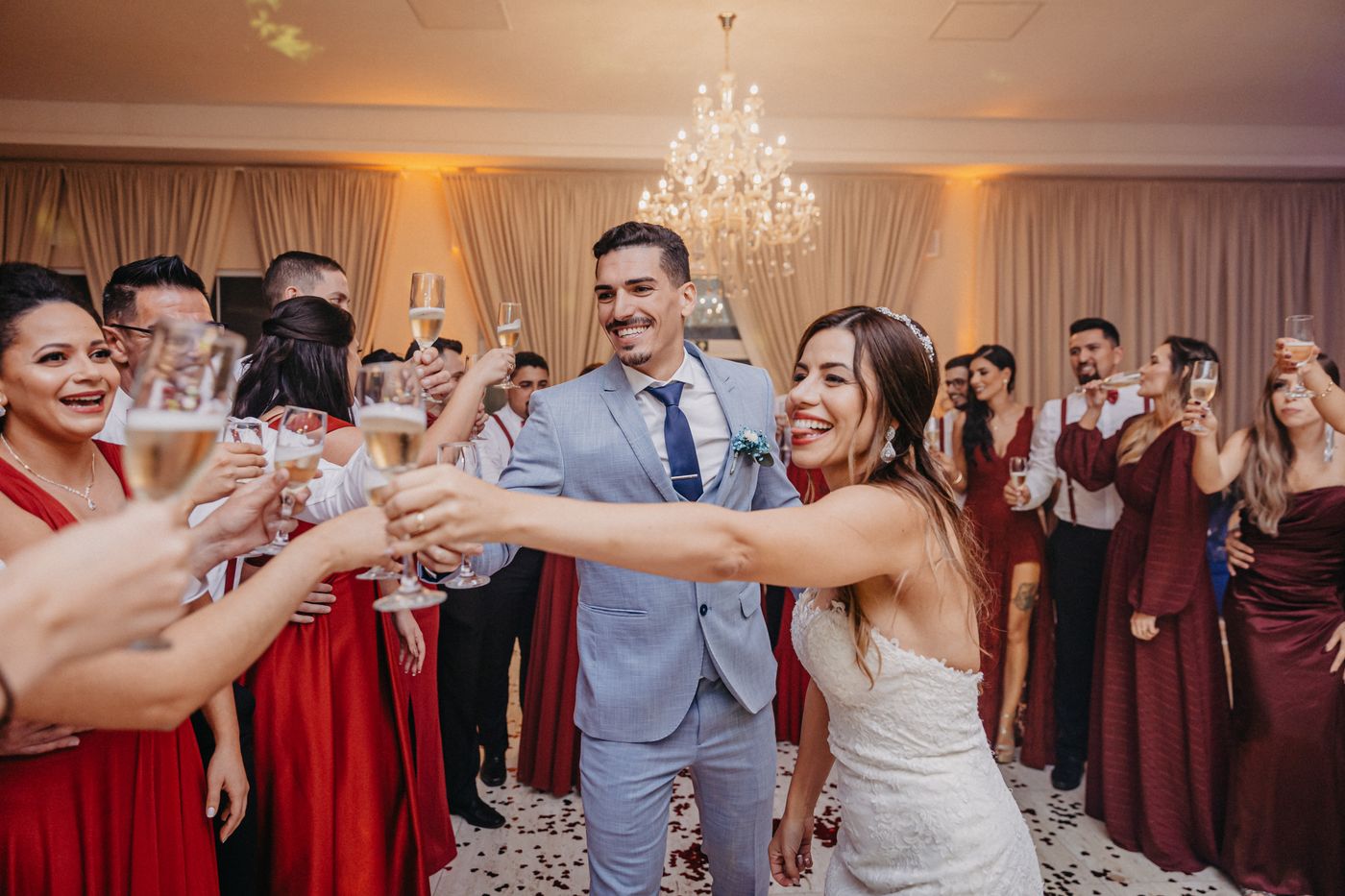
Plan on one drink per guest for every hour of the reception, so 100 guests at a five-hour party need about 500 drinks (Zola). For a full bar that works out to roughly 50 bottles of wine, 9 bottles of liquor and 5 cases of beer, which costs around $1,000 if you buy it yourselves.
The rest of this article turns that rule into a shopping list, shows what it costs, and explains when to round up or down. Grab your guest count and your reception hours, and you can have a real number in ten minutes.
The rule of thumb, in plain numbers
Zola's starting point is simple: one drink per guest per hour (Zola). Count the hours the bar is actually open, not the hours on the invitation. If dinner speeches and the cake cutting happen while people are seated, they still drink, so count those hours too.
Then convert drinks into containers. These are the serving counts Zola uses:
| Drink | Servings per container |
|---|---|
| Wine, 750 ml bottle | 5 glasses |
| Sparkling wine for a toast | 8 small pours |
| Liquor, 750 ml bottle | 18 mixed drinks |
| Beer, case of 24 | 24 bottles or cans |
| Beer keg (15.5 gallons) | about 165 servings |
A keg sounds like the bargain choice, but 165 servings is a lot. Zola points out that it serves 80 guests two beers each, so for a smaller list or a crowd that prefers wine, cases are easier and you can return the leftovers.
How much to buy for 100 guests
For a full bar, Zola splits drinks as 50% wine, 30% liquor and 20% beer. For beer and wine only, it suggests about 75% wine and 25% beer (Zola). Here is what that means for 100 guests and a five-hour reception, so 500 drinks:
| Full bar | Beer and wine only | |
|---|---|---|
| Wine | 250 glasses = 50 bottles (just over 4 cases) | 375 glasses = 75 bottles (just over 6 cases) |
| Liquor | 150 drinks = 9 bottles | none |
| Beer | 100 = 5 cases of 24 | 125 = 6 cases of 24 |
| Toast (optional) | 13 bottles of sparkling | 13 bottles of sparkling |
Most stores sell wine by the case of 12, so round up to whole cases. A few extra bottles is fine. Running dry at 9 pm is not.
When to buy more or less
The rule is a middle-of-the-road guess. Adjust it for your actual crowd:
- Take out non-drinkers. Kids, pregnant guests and people who don't drink should come off the count before you multiply. If 20 of your 100 guests won't drink, you are buying for 80.
- Look at the ages. A big group of college friends will drink more than a table of grandparents. Be honest about which one you are inviting.
- Think about the time of day. A lunch or brunch reception uses noticeably less than a Saturday night party. If you want the full picture on daytime receptions, see our notes on cheap wedding food.
- Watch the heat. On a hot afternoon, guests reach for beer and white wine first. Shift a little from red to white and add an extra case of beer.
- Know your wine people. If your families mostly drink red, don't buy the 50/50 red and white split by default. Ask a couple of relatives. It takes one text.
What it costs: buying it yourselves vs a venue package
If your venue lets you bring your own drinks, the math above gets cheap. Zola's calculator assumes $14 for a bottle of wine, $22 for a 750 ml bottle of liquor, $19 for a case of beer and $50 for a bottle of champagne (Zola). For the 100-guest full bar above:
- 50 bottles of wine at $14: $700
- 9 bottles of liquor at $22: $198
- 5 cases of beer at $19: $95
- 13 bottles of champagne at $50: $650
That is about $990 without the toast, or $1,643 with it. You can bring the toast down a lot by using a cheaper sparkling wine than the $50 bottle Zola assumes.
Compare that with a bar package from a caterer. Paperlust lists $25 to $45 a person for beer and wine and $40 to $65 for a full open bar with house spirits, plus 20% to 25% for tax, service and tip (Paperlust). For 100 guests that is $2,500 to $6,500 before the extras. The same source puts the national average alcohol spend at $2,800, based on The Knot's 2025 Real Weddings Study.
Buying it yourselves still has costs. You need someone licensed to pour: Paperlust puts an independent bartender at $100 to $300 for the event, plus tip. Many venues also charge a corkage fee, so ask before you buy a single bottle. Our budget breakdown shows where the bar sits next to food and venue.
Five ways to spend less on drinks
- Serve beer, wine and one signature cocktail. Paperlust estimates this saves roughly 30% to 50% compared with a full open bar. A signature drink also means one bottle of liquor, one mixer and one garnish instead of a whole back bar.
- Shorten the bar hours. Each hour you cut saves $5 to $15 per person on a package. Closing the bar during dinner, or 30 minutes before the end, is an easy cut most guests barely notice.
- Skip the separate champagne toast. It costs $2 to $5 a person on a package. Let guests toast with whatever is in their glass. Need ideas for the words? Our welcome toast guide has some.
- Ask about returns. Zola notes that some liquor stores take back unopened bottles after the wedding. Get the policy in writing when you buy, and keep the cases sealed.
- Pick a Friday or Sunday. Paperlust says off-peak days can save 10% to 20% on service fees.
You are also in good company if you keep it simple. Paperlust cites The Knot: about 9% of US weddings are dry and 17% serve only beer and wine.
Put the empties and the bar to work
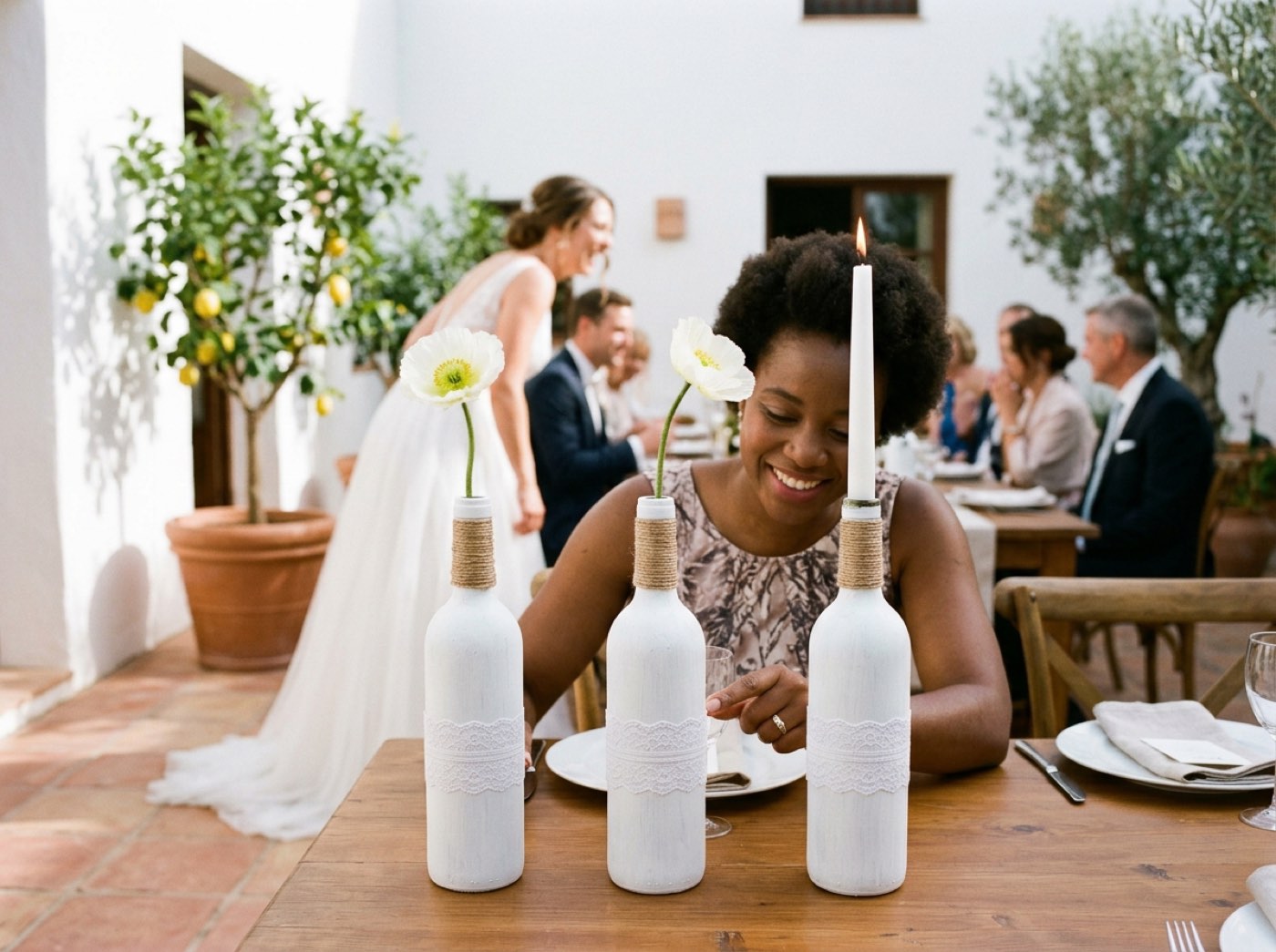
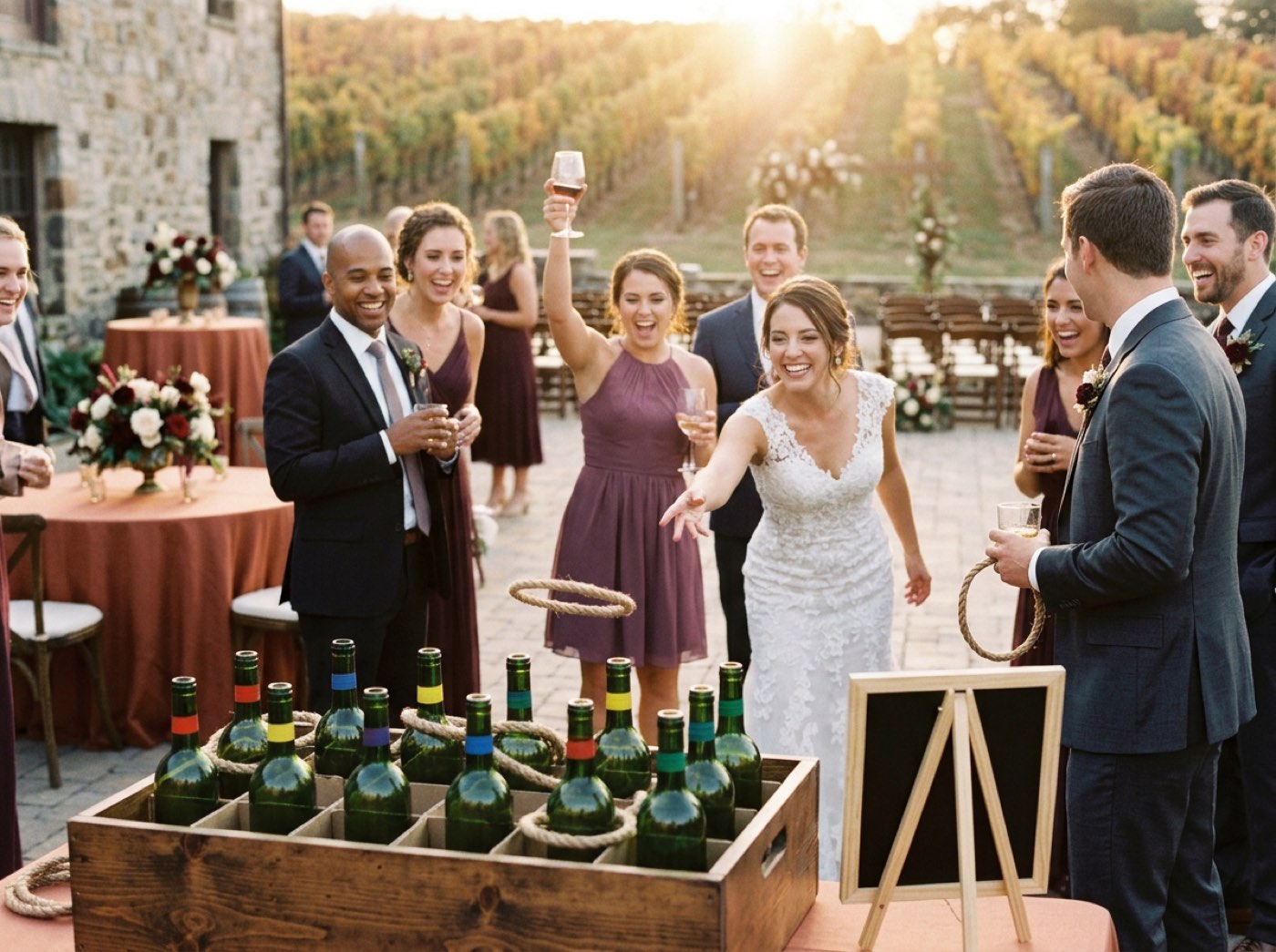
All those empty wine bottles don't have to go straight to recycling. Rinse and peel a few dozen during the week before, and they turn into painted wine bottle centerpieces for every table. Another dozen, standing in an old wine case, becomes a wine bottle ring toss for cocktail hour.
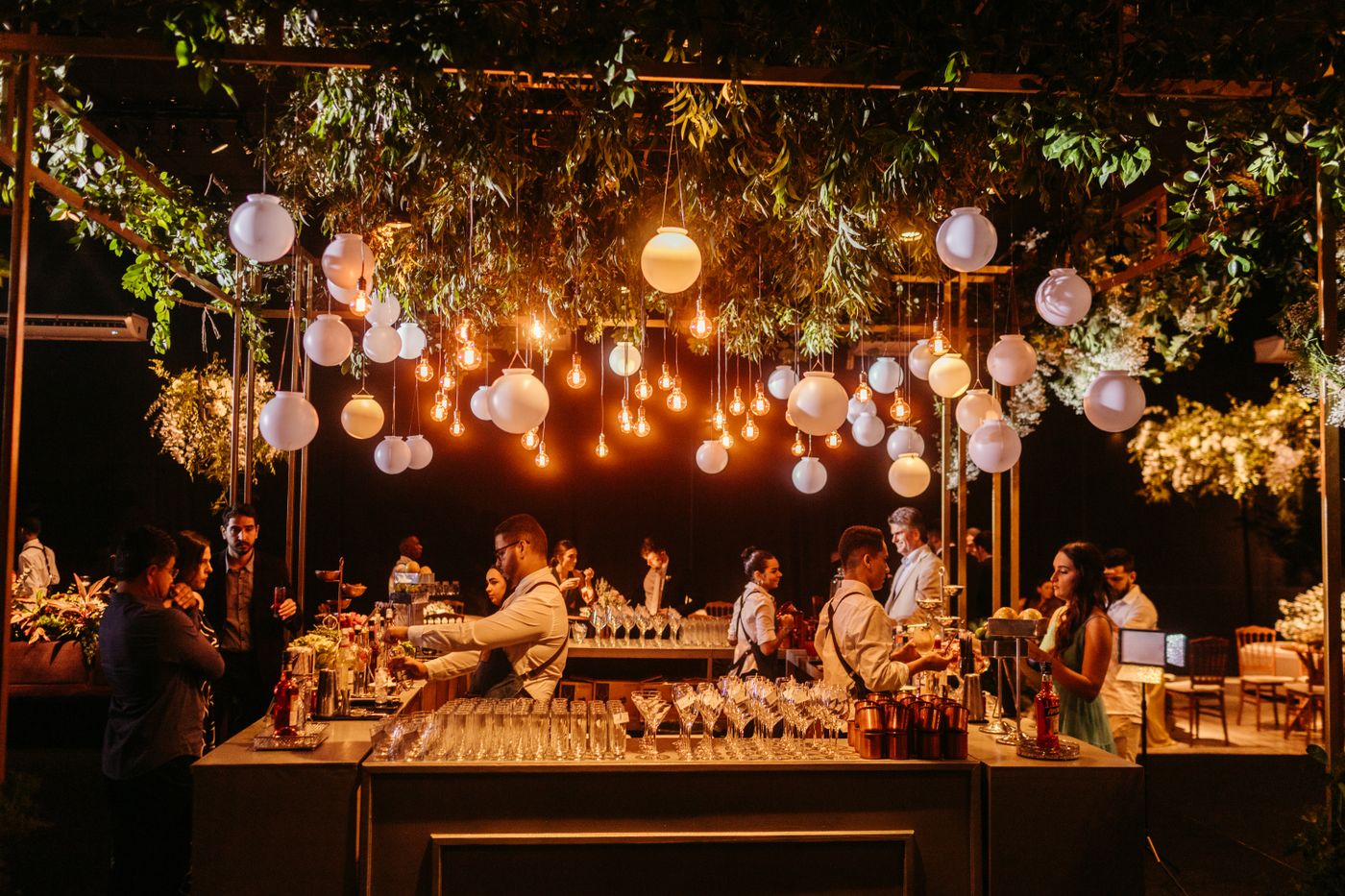
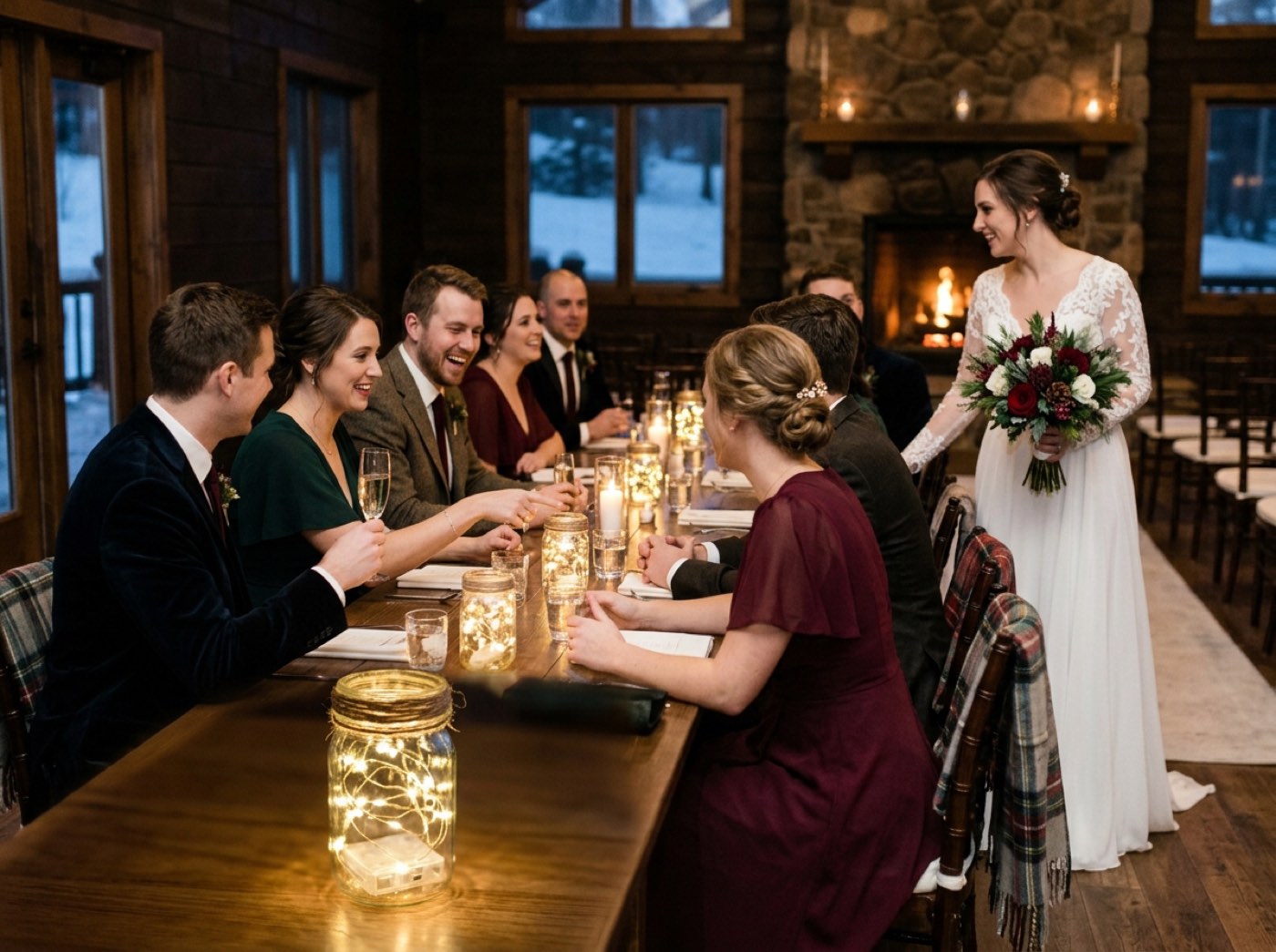
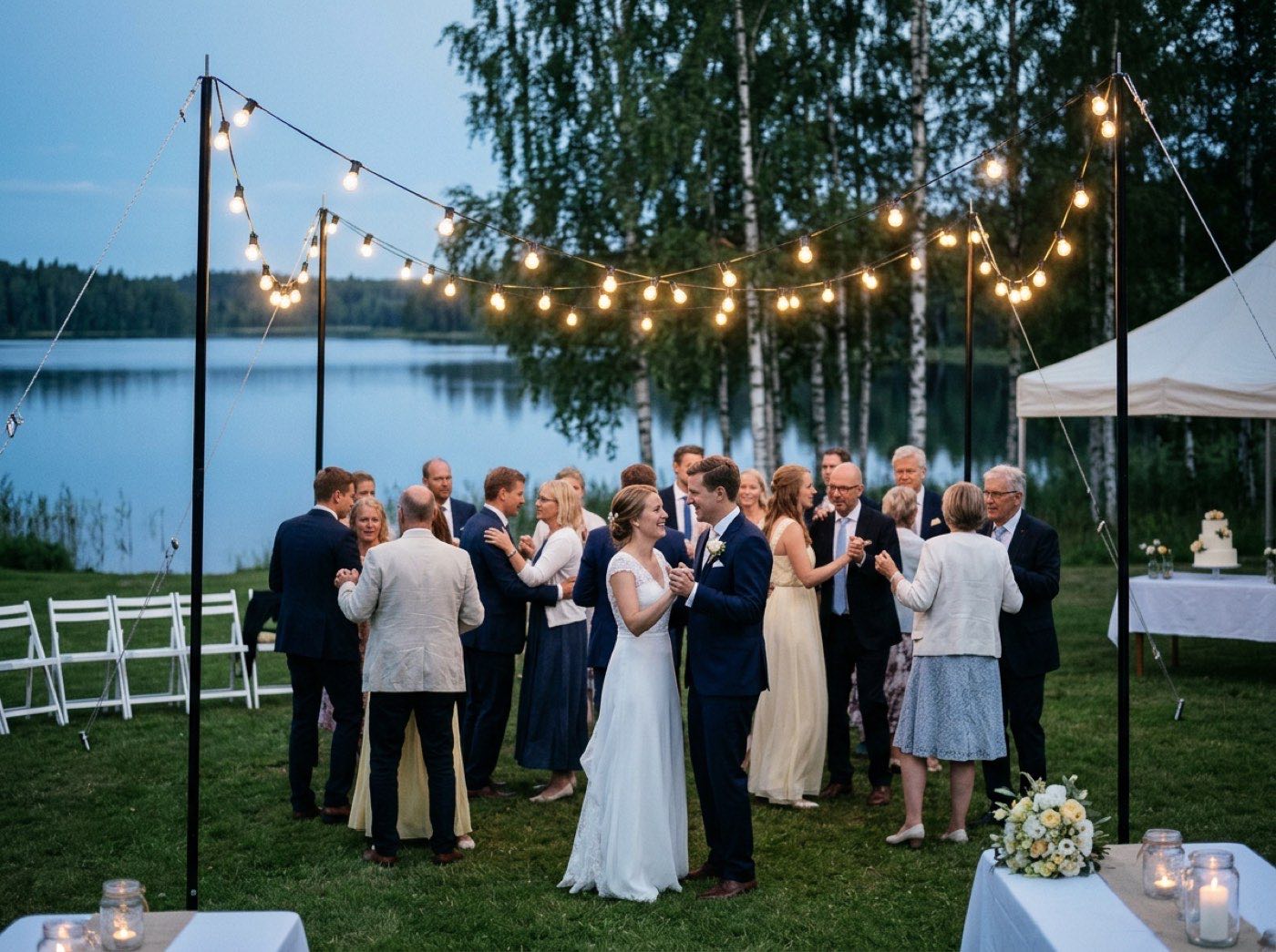
A self-serve or friend-run bar also looks much better once it's lit. A row of fairy light jars along the bar top costs very little, and if the bar is outdoors, a string light canopy over the bar and dance floor turns a folding table into a place people want to stand.
Where saving on alcohol is not worth it
- Don't run out. Buy to the rule, then add a buffer. Leftover sealed bottles can be returned or drunk at the next family barbecue.
- Don't skip water and soft drinks. Put water on every table and keep sodas and juice at the bar. Drivers and non-drinkers should have more than tap water to choose from.
- Don't make a friend bartend all night. Pouring for 100 people is a job. Hire one, or set up shifts so nobody misses the wedding.
- Don't forget the ice. Ask your bartender how much they need for your guest count, then buy extra. It melts faster than you'd think.
Count your drinking guests, multiply by your bar hours, and use the table above. Once you have that one number, the shopping list almost writes itself.
Guides in this article
Unlock our complete DIY library
Free
- Cost and savings estimates for every project
- Materials lists to help you plan
- The “How much can you save?” overview
- New blog posts with inspiration and advice
A short list of the cheapest projects with the biggest savings. We email it to you.
Full access
$29
- Step-by-step instructions for every project
- Cost and quantity tables for 50, 100 or 150 guests
- Pro tips and common pitfalls to avoid
- Printable checklists to keep you on track
- Save your favorite projects
- New guides added every week
One payment, yours to keep. No subscription.
More tips & articles
- Wedding Lighting Ideas on a Budget: Warm, Glowing Light for 100 Guests for About $254
- Cheap Wedding Venue Ideas: 8 Places That Cost a Fraction of the Average
- The Cheapest Month to Get Married (and the Cheapest Days, Based on Real Data)
- How Many Centerpieces Do I Need for a Wedding? A Simple Count, Table by Table